Online video marketing is now part of almost every customer’s day: reels between messages, product videos before buying, how-to clips on YouTube. For a business, video can explain, demonstrate and build trust faster than text. It can also swallow time and budget with little to show for it. This guide covers what to decide before you press record.
Why online video marketing works
Video shows what words can only describe. A thirty-second clip can demonstrate a product, introduce the people behind a business and answer a common question at once. It works across the whole journey: short clips attract attention, explainers help people compare, and testimonials and demonstrations help them decide.

1. Decide what the video is for
Every video should have one job. Choose it before anything else, because it determines length, format and where the video goes.
| Goal | Best format | Where it works |
|---|---|---|
| Get discovered | Short, vertical clips with a strong hook | Reels, Shorts |
| Explain a product or service | One to three minute explainers | Website, YouTube |
| Build trust | Customer stories, behind the scenes | Website, social media |
| Answer questions | Short how-to and FAQ videos | YouTube, Google search |
| Drive sales | Product demonstrations and offers | Product pages, ads |
2. Know who you are talking to
A video for first-time buyers sounds different from one for existing customers. Write down who the viewer is, what they already know and what would make them stop scrolling. In many Indian markets, that also means choosing the language: Hindi, English or a natural mix often performs better than formal language.
3. Choose the right platforms
You do not need to be everywhere.
- Instagram and Facebook Reels suit consumer brands, local businesses and quick tips.
- YouTube suits longer explanations, tutorials and anything people search for.
- YouTube Shorts extends reach with clips cut from longer videos.
- LinkedIn suits B2B expertise and company news.
- Your own website is where product and service videos help visitors decide.
4. Plan the first three seconds
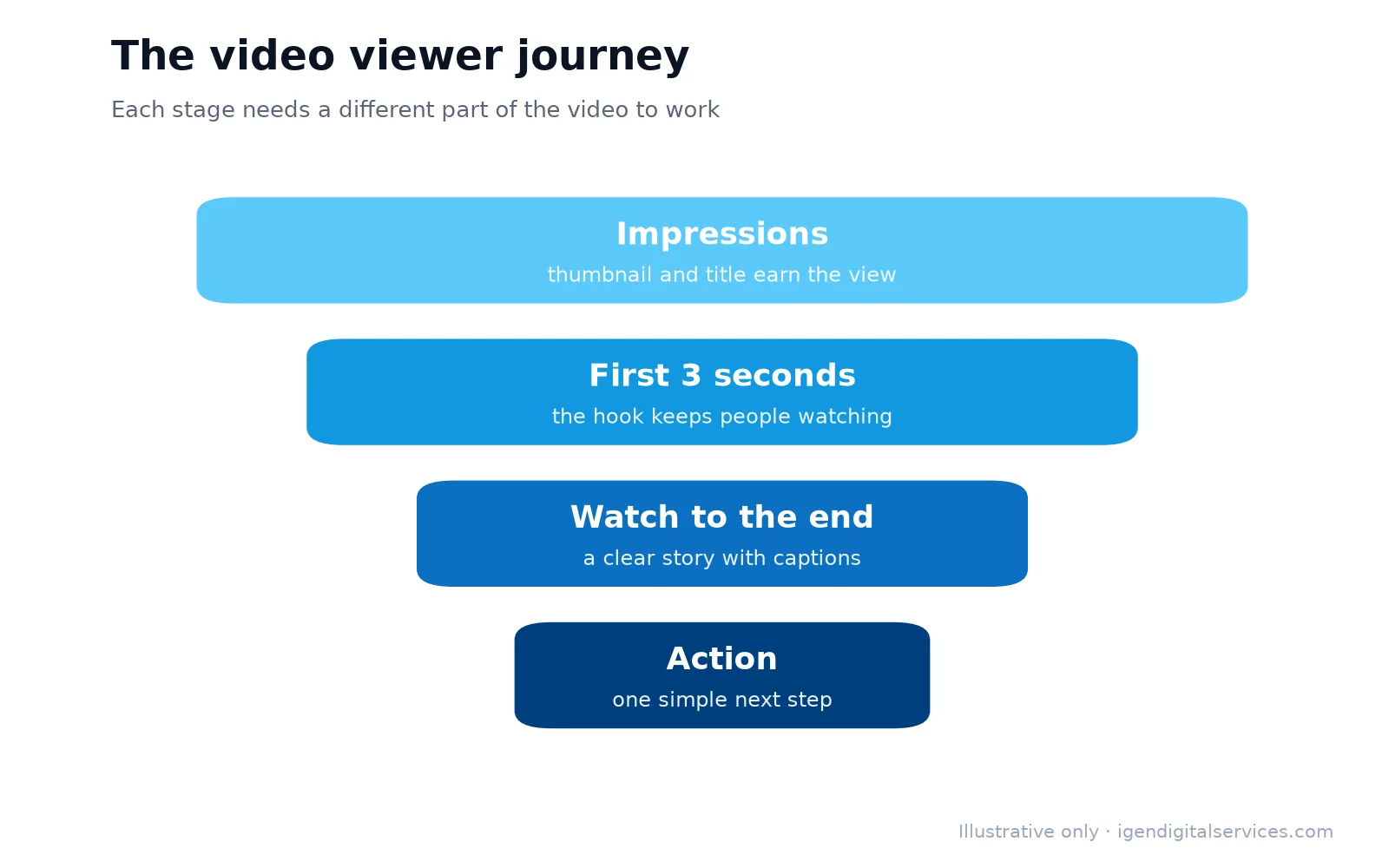
Most viewers decide almost immediately whether to keep watching. Open with the point: the result, the question or the problem. Avoid long logo animations and introductions. A simple structure works for most business videos:
- Hook — the question or promise.
- Value — the answer, shown as well as told.
- Proof — a quick example or detail.
- Action — one clear next step.
5. Keep production simple
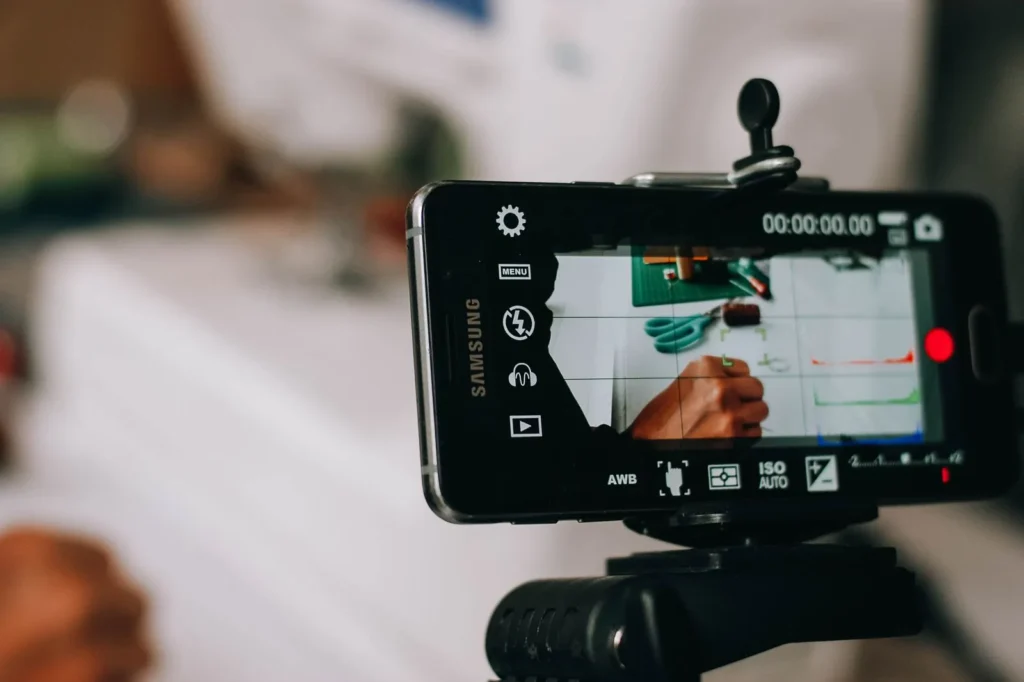
Good online video marketing does not need a studio. A recent phone, steady framing and clear sound cover most needs.
- Light from the front, using a window or a simple light.
- Record clean audio; a small clip-on microphone makes the biggest difference.
- Hold the phone steady with a tripod.
- Shoot vertically for reels and shorts, horizontally for YouTube and websites.
- Film several clips in one session to save time.
6. Add captions and text
Many people watch with the sound off. Captions make videos understandable in silence, help viewers who are hard of hearing and give platforms text to understand the topic. Keep on-screen text large, short and away from the edges where app buttons cover it.

7. Make videos findable
Video has its own SEO. On YouTube, write a clear title with the main topic first, a description that explains the video in a few sentences, and chapters for longer videos. Choose a thumbnail that is readable at small size. On your website, place videos on relevant pages with a short written summary; Google’s video best practices explain how videos are indexed.
8. Measure what matters
Views alone say little. Judge each video against its job:
| Goal | What to measure |
|---|---|
| Discovery | Reach, views from non-followers, shares |
| Interest | Average watch time, saves, comments |
| Action | Link clicks, messages, enquiries, sales |
| Search | Impressions and clicks from YouTube and Google |
Watch where viewers drop off. If most leave in the first seconds, fix the hook; if they leave midway, tighten the middle.
Budget and time
Decide what is realistic before starting. One well-planned shooting session each month can produce a main video and several short clips. If budgets are small, spend on sound and editing before cameras. Paid promotion helps good videos reach further, but it rarely rescues weak ones.
A starter plan for a small business
- Week 1: list ten questions customers ask most often.
- Week 2: film short answers to all ten in one session.
- Week 3: edit with captions and post two clips a week.
- Week 4: review which clips held attention and plan the next batch around them.

Common mistakes
- Starting with a long introduction instead of the point.
- Making one long video and posting it everywhere unchanged.
- Poor sound, which viewers forgive less than imperfect pictures.
- No call to action, so viewers do not know what to do next.
- Judging success by views rather than enquiries.
If you want help planning, editing and promoting video, it is part of our social media marketing service.
Video ideas by type of business
If you are unsure what to film, start with what customers already ask:
| Business | Video ideas |
|---|---|
| Shops and showrooms | New arrivals, how to choose, styling or usage tips |
| Clinics and wellness | Common questions answered, what to expect at a visit |
| Schools and coaching | Campus tours, teacher introductions, study tips |
| Manufacturers | Factory process, quality checks, product demonstrations |
| Restaurants and food | Signature dishes, the kitchen, customer favourites |
| Service businesses | Before and after, how the process works, mistakes to avoid |
Turn one video into many
Online video marketing becomes affordable when each recording is reused. From one three-minute explainer you can cut two or three short clips for reels and shorts, pull a quote for an image post, embed the full video on the relevant website page, add it to an email and use the transcript as the basis of an article. Plan these uses before filming, so you capture both horizontal and vertical versions.
People, permissions and claims
Get written consent from customers and staff who appear on camera, and be careful with music: use tracks licensed for business use or the libraries platforms provide. Keep claims accurate, especially for health, finance and education, where platforms and regulators look closely. A truthful, modest video builds more trust than an exaggerated one.
Key takeaways
- Give every video one job, and let that decide its length, format and platform.
- Win the first three seconds with the point, not an introduction.
- Simple production with clear sound and captions is enough for most businesses.
- Measure watch time and actions, not views alone.
Frequently asked questions
What is online video marketing?
How long should a marketing video be?
Do I need professional equipment?
How often should I post videos?
Should I put videos on YouTube or Instagram?
Does video help SEO?
Want expert help with this?
See what our social media marketing services include, or get a free proposal for your business.

Digital Marketing Consultant and Certified Marketing Analyst from IIT Roorkee, with 10+ years of experience helping businesses improve their digital presence, generate qualified leads and drive measurable growth through SEO, AEO, GEO, Google Ads, performance marketing and analytics.