Packtek Packaging: From a brand-new website to 200+ organic leads every month
Packtek Packaging manufactures custom corrugated boxes, paper bags and rigid boxes for brands across India. We started from scratch — building their website and taking it from zero search presence to a steady source of B2B enquiries.
IHMS Kotdwar: 45 admissions from ads in 2026 — and a website on Google’s first page
IHMS Kotdwar offers MBA, MCA, BBA, BCA, B.Sc IT and hotel management programmes. We built their website, optimise it for search, and run Google and Meta ad campaigns for admissions. In 2026, ₹6 lakh in ad spend generated 400+ leads — about ₹1,500 per lead — and 45 admissions.
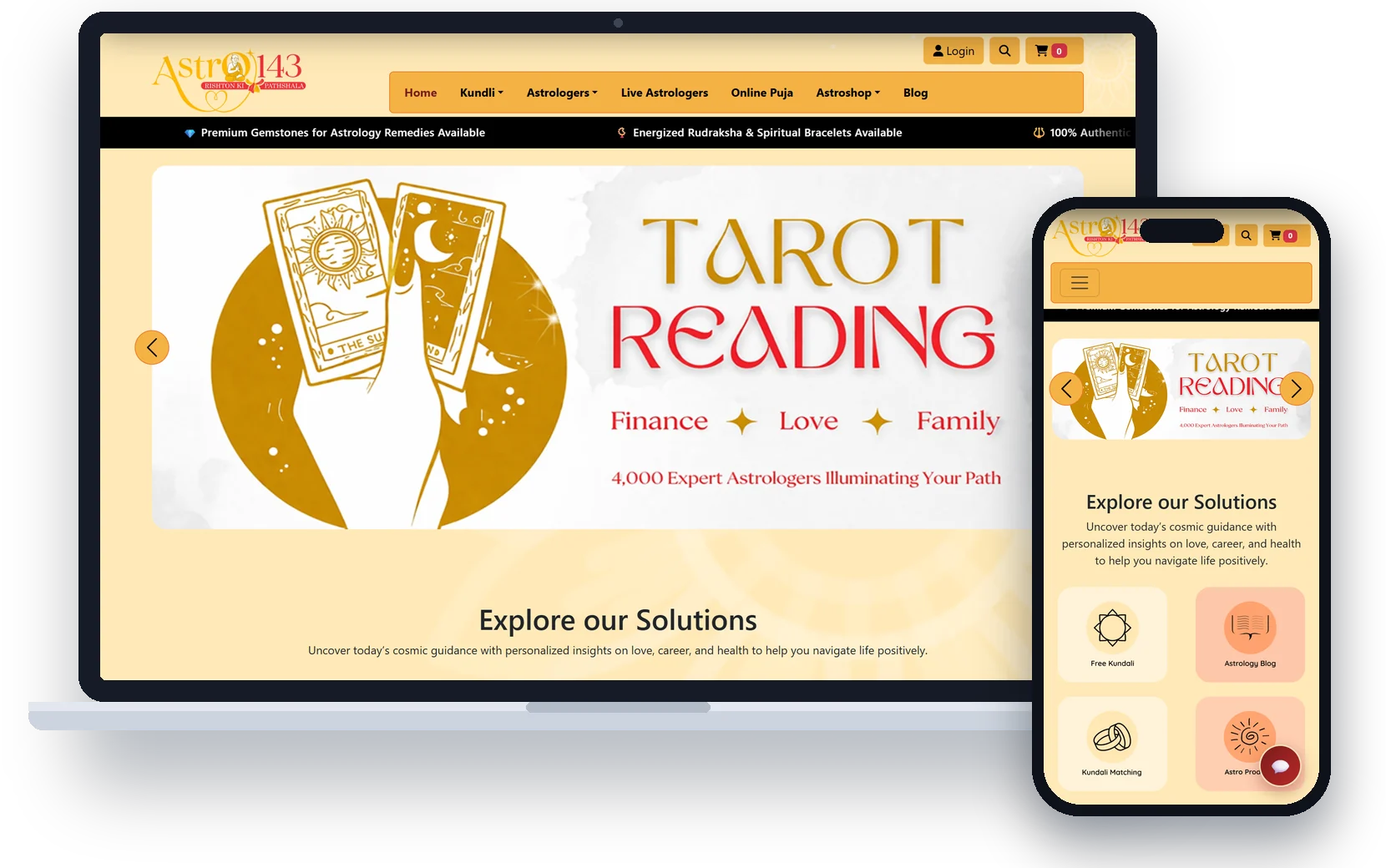
Astro143 offers online astrology consultations, Kundli services and Vedic guidance, along with an online store for Rudraksha and gemstones. We took over their website management and SEO in August 2026 — search visibility is already building, and results are improving week by week.
Calls, forms and WhatsApp chats — tracked to their source.
Revenue & ROI
Sales and return on ad spend, not just clicks.
Rankings & traffic
Keyword positions and organic visits over time.
Cost per result
Cost per lead, per sale and per acquisition.
Behind the numbers
Digital marketing case studies: what we did, what changed and what it means for you
Case studies are the most honest way to judge a marketing agency. Anyone can promise growth; case studies show what actually happened for real businesses. This guide explains each of our case studies in more depth — the starting point, the work, the numbers and the lessons — and shows how to read any agency’s case studies critically, so you can make a confident decision.
How to read our case studies
Every number in our case studies comes from the client’s own accounts: Google Search Console for search impressions, clicks and average position, and the Google Ads and Meta ad platforms for spend and leads. Admissions and enquiry figures come from the clients themselves. Search Console figures cover the most recent three-month period shown on each case study. We do not round up, combine unrelated periods or use estimates. If you want to understand a metric, Google explains each one in its Search Console performance report guide.
Metric
What it means
Impressions
How many times the website appeared in Google search results
Clicks
How many times people clicked through to the website from Google
Click-through rate (CTR)
Clicks divided by impressions — how appealing the result is
Average position
The average ranking position across all searches the site appeared for
Leads
Enquiries received: calls, forms or messages
Cost per lead
Advertising spend divided by the number of leads
Digital marketing case studies – reviewing client campaign results on an analytics dashboard
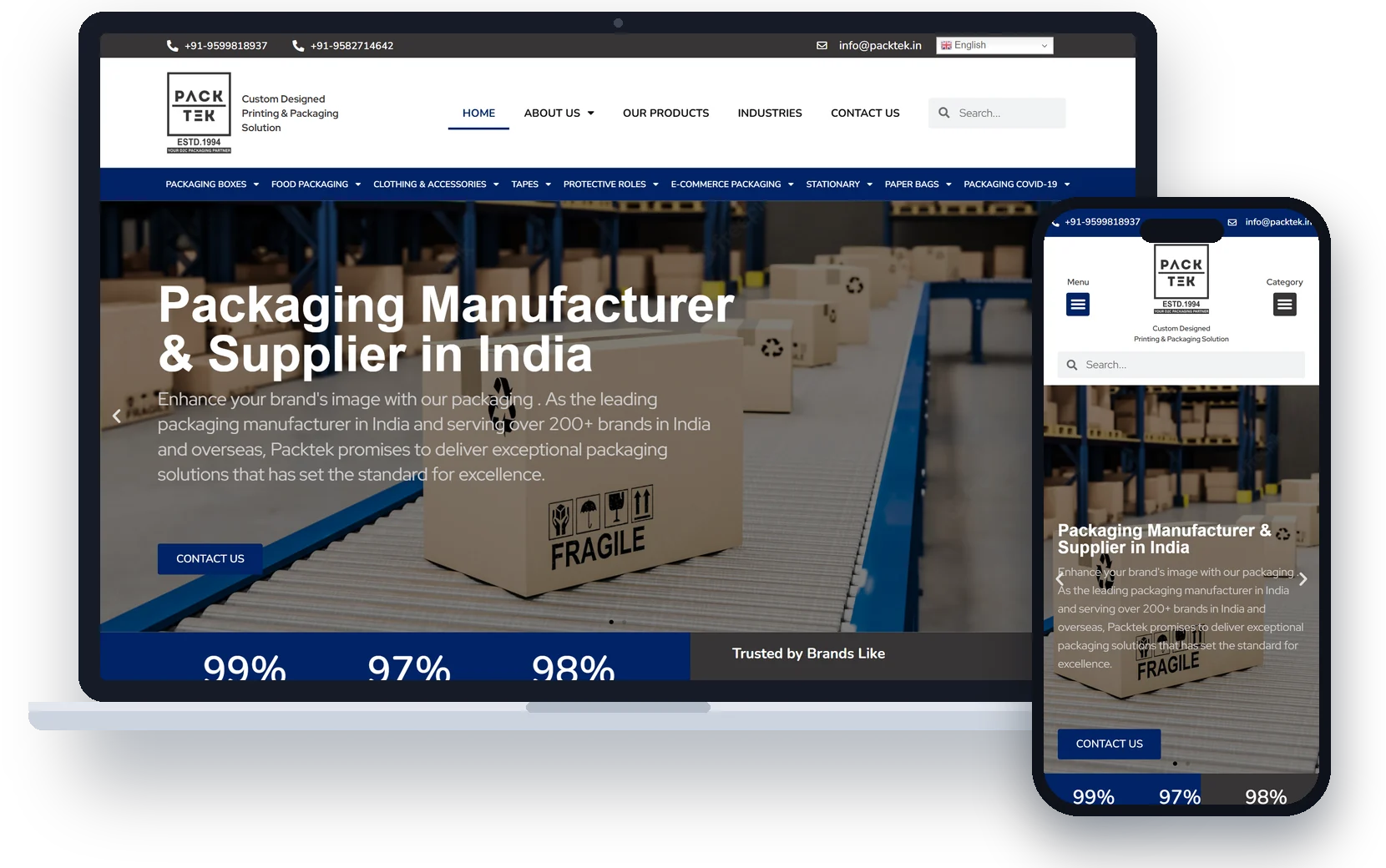
Packtek Packaging: SEO case study, India
Starting point. Packtek Packaging manufactures custom corrugated boxes, paper bags and rigid boxes for brands across India. When we started, there was no website and no search presence, so every enquiry depended on referrals and offline sales.
What we did. We designed and built a fast new website, researched keywords across the full product range, created search-optimised product and category pages, and have continued technical and on-page optimisation since launch.
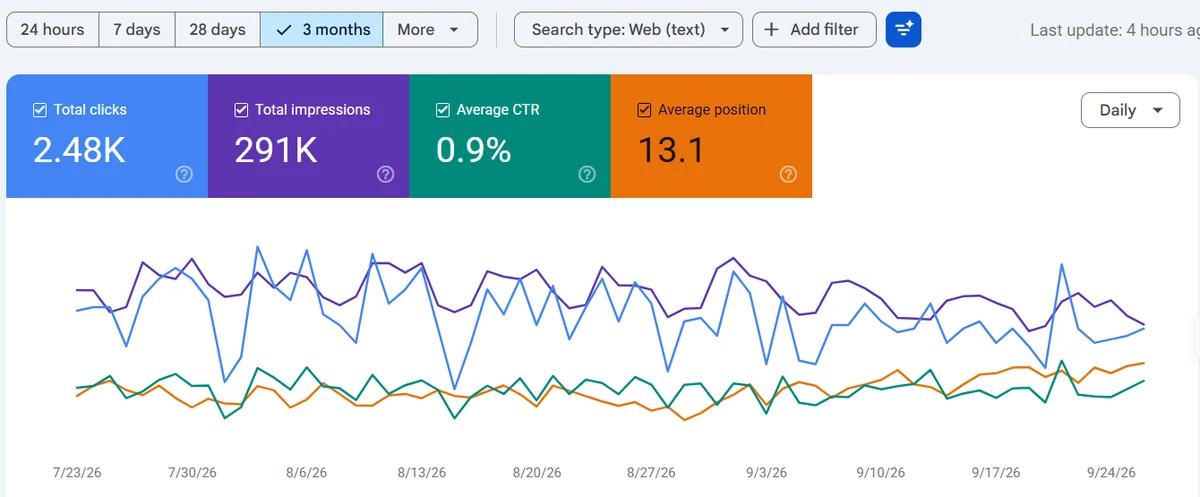
Results. Packtek now receives 200+ organic leads every month. In the latest three months, the website appeared 291K times in Google search and received 2.48K clicks.
What it shows. For B2B manufacturers, buyers search for specific products — box types, materials, sizes and uses. Building a dedicated, well-structured page for each product lets the website match many of these searches, and each page becomes a permanent source of enquiries. This SEO case study shows that a new website, planned around real searches from day one, can become a company’s main lead source.
IHMS Kotdwar: a Google Ads case study in education
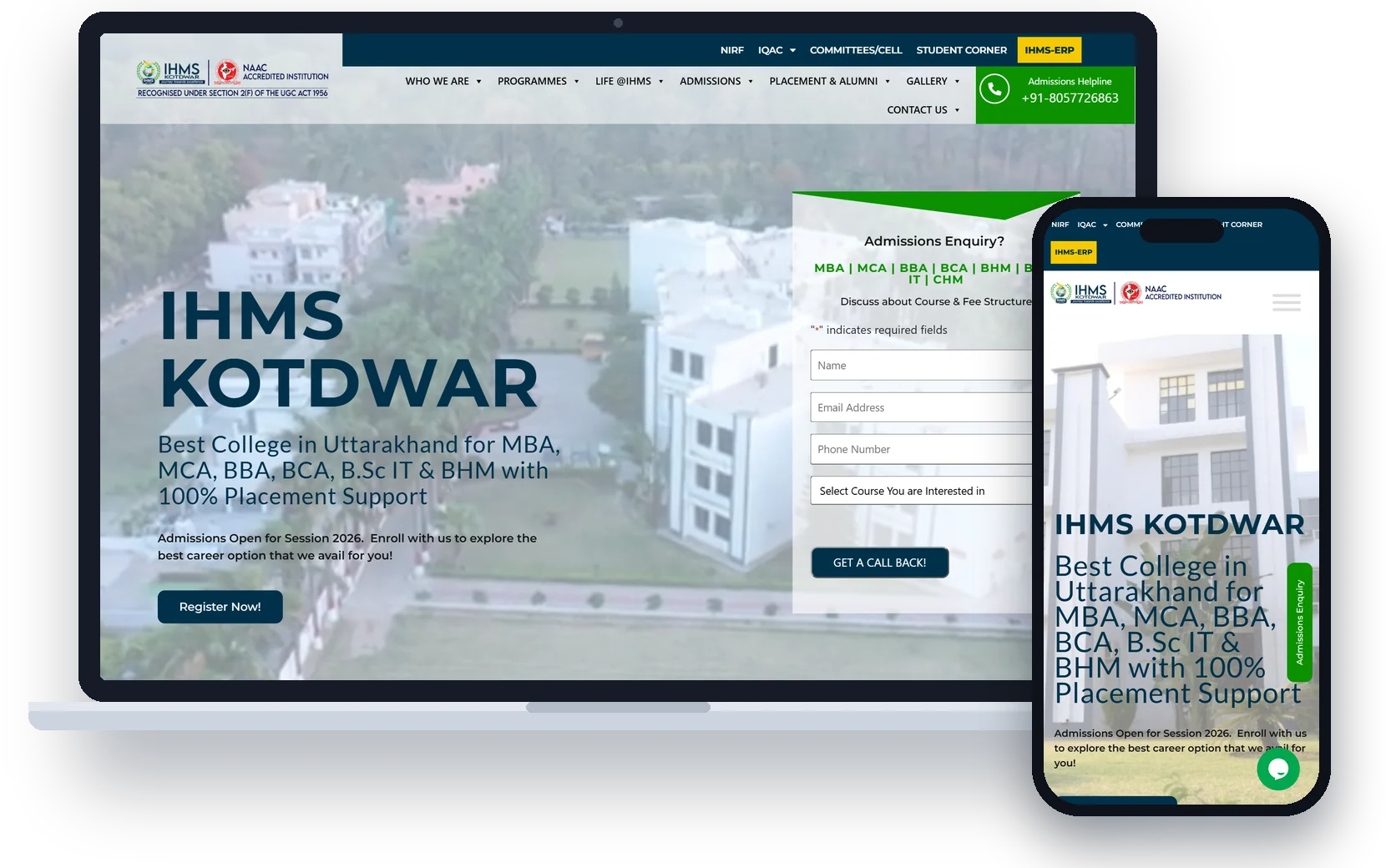
Starting point. IHMS Kotdwar offers MBA, MCA, BBA, BCA, B.Sc IT and hotel management programmes. Admissions are seasonal and competitive, so the institute needed a steady flow of enquiries from students and parents at the right time of year.
What we did. We built the college website, optimised it for course and admission searches, and ran Google Ads and Meta (Facebook and Instagram) ad campaigns for admissions.
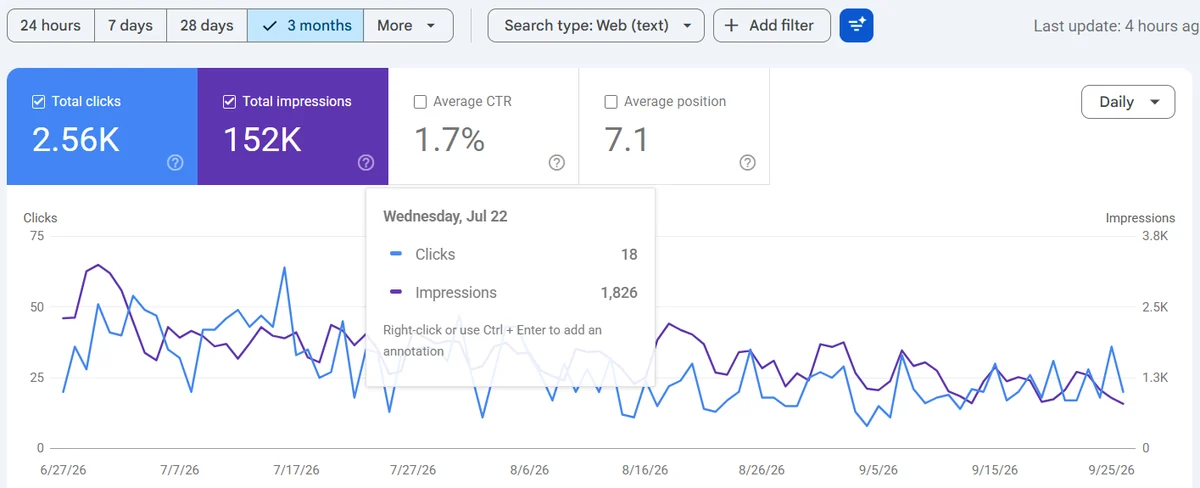
Results. In 2026, ₹6 lakh in ad spend generated 400+ leads — about ₹1,500 per lead — and 45 admissions. In the latest three months, the website appeared 152K times in Google search, received 2.56K clicks and held an average position of 7.1.
What it shows. Education marketing works best when paid ads and organic search support each other. Ads bring enquiries during admission windows, while search visibility keeps the institute in front of students researching courses all year. Tracking every lead from source to admission means budgets can move to the campaigns that produce students, not just clicks. Roughly one admission came from every nine leads, which is why lead quality matters as much as lead volume.
Astro143: early SEO momentum
Starting point. Astro143 offers online astrology consultations, Kundli services and Vedic guidance, with an online store for Rudraksha and gemstones. We took over website management and SEO in August 2026.
What we did. Technical and on-page SEO fixes, Search Console monitoring and weekly optimisation.
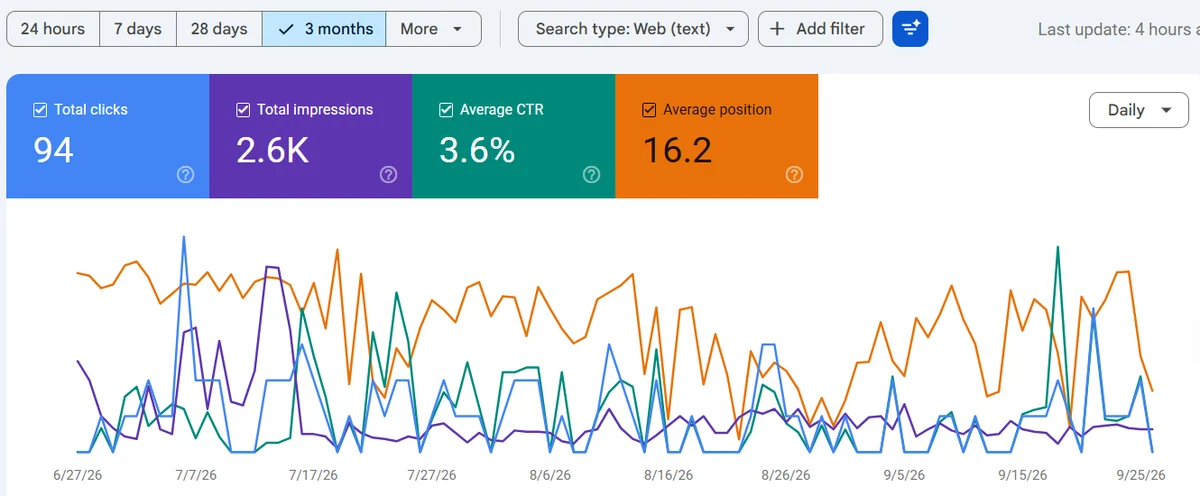
Results so far. A 3.6% click-through rate from 2.6K Google impressions, with 94 clicks in the latest three months. This is an early-stage case study, and we will update it as results develop.
What it shows. In the first weeks of SEO, impressions and click-through rate usually move before traffic and enquiries do. A healthy click-through rate early on suggests titles and descriptions are matching what searchers want, a good foundation for the growth that follows.
What these digital marketing case studies have in common
Although the businesses are very different — a B2B manufacturer, an education institute and an online consultation service — the case studies share clear patterns:
A strong website comes first. Every project either started with a new website or with fixing the existing one.
Research before content. Pages were built around the words real customers use.
Tracking from day one. Leads, admissions and sales were measured, so decisions were based on data.
Channels support each other. Ads and SEO worked together where both were used.
Consistency over time. Results came from steady weekly work, not one-off campaigns.
How SEO results build over time
SEO case studies often show the same sequence. First, Google discovers and indexes the pages, and impressions rise as the website appears for more searches. Next, rankings improve for less competitive terms, and clicks start to grow. Finally, as more pages reach the first page, enquiries become steady and predictable. The speed depends on competition, the website’s history and how much content is created, which is why honest agencies give timelines as ranges rather than promises.
How paid advertising results are measured
For advertising, the most useful numbers are cost per lead and cost per sale or admission, not clicks or impressions alone. A campaign with cheap clicks but poor leads can cost more per customer than one with expensive clicks and excellent leads. We track leads from each campaign through to the final outcome where the client shares that data, then shift budgets toward what produces real customers.
How to judge any agency’s case studies
When comparing agencies, use their case studies to ask sharp questions:
Are the numbers specific? “200+ leads a month” is meaningful; “massive growth” is not.
Is the source clear? Look for data from Search Console, analytics or ad platforms.
Is the time period stated? Numbers without dates can hide short spikes.
Is the client real and named? Anonymous case studies are harder to trust.
Do results match business goals? Leads, sales and admissions matter more than likes or rankings.
Is the work explained? Good case studies describe what was done, not just the outcome.
Lessons you can apply today
You do not need to be our client to learn from these case studies. A few steps that helped every project are free to start:
Check Google Search Console — see which searches already show your website, and which pages get impressions but few clicks.
Improve titles and descriptions — clearer, more specific titles often lift click-through rate within weeks.
Build one page per product or service — dedicated pages match more searches than one general page.
Track every enquiry — note where each call, form or WhatsApp chat came from.
Respond quickly — leads contacted within minutes usually convert better than those contacted the next day.
These basics make any marketing investment more effective, and they make future results easier to measure.
Could your business get similar results?
Every business is different. Results depend on your industry, competition, location, website, budget and how quickly you can respond to enquiries. What we can promise is the same process behind these case studies: an honest audit, a clear plan, careful execution, accurate tracking and transparent reporting. After an audit, we will tell you what is realistic for your business and which channels are most likely to pay back first.
Industries we can help
Beyond the businesses featured here, we work with healthcare providers, retailers, ecommerce and D2C brands, food businesses, IT companies, hotels and other agencies. Our work includes SEO services, Google Ads, social media marketing, website development and marketplace management. If you would like to see examples closer to your industry, ask us during your consultation.
Why we publish verified results only
Many marketing websites use large, round numbers without any source. We have chosen a stricter rule: if we cannot show where a number comes from, we do not publish it. That means fewer, smaller case studies than some agencies show, but every one of them is real. We believe this honesty is itself a good test of how an agency will report to you once you are a client.
The tracking behind our case studies
Reliable case studies depend on reliable tracking. For every client, we connect Google Search Console and Google Analytics, set up conversion tracking in Google Ads and Meta, and track calls, WhatsApp chats and form submissions wherever possible. Where the final outcome happens offline — an admission, a signed order or a site visit — we agree a simple way for the client to share those results each month. This is what allows us to report real business outcomes instead of clicks alone, and to write case studies with numbers we can stand behind.
Client confidentiality
Some clients are happy for us to share their results publicly; others prefer to keep their marketing private. We only publish case studies with a client’s permission, and we never share confidential data such as revenue, margins or customer details. If you become a client, you decide whether your results can ever be shared.
What happens after a case study is published
Our case studies are living records, not one-off marketing pieces. As work continues, we update the numbers, add new learnings and note when a strategy changed. Early-stage projects, such as Astro143, are clearly marked as in progress so readers do not mistake early signals for final outcomes.
Becoming our next case study
Many of our best results came from clients who shared their goals openly, gave quick feedback and stayed consistent through the early months. If you would like results like these, the first step is a conversation about your business. You can request a quote, try our free SEO analysis, or read about us to learn more about how we work.
Key takeaways
Our case studies use real data from Search Console, ad platforms and the clients themselves.
Packtek receives 200+ organic leads a month from a website built and optimised by us.
IHMS Kotdwar gained 400+ leads and 45 admissions from ₹6 lakh of ad spend in 2026.
Judge any agency’s case studies by specific numbers, clear sources and stated time periods.
Frequently asked questions
Are your case studies real?
Yes. Every case study features a named client, and every number comes from Google Search Console, ad platforms or the client’s own records, for the time period stated.
How long did it take to get these results?
It varies by project. Search results build over months, while ads can bring leads within days. Each case study states the period its numbers cover.
Can I get similar results for my business?
Results depend on your industry, competition, website and budget. After an audit, we explain what is realistic and which channels are likely to work first.
Do you have case studies for my industry?
We have worked with manufacturers, education institutes, ecommerce brands, healthcare, food and IT businesses. Ask us for relevant examples during your consultation.
What does cost per lead mean?
It is the total ad spend divided by the number of leads. For IHMS Kotdwar, ₹6 lakh of ad spend produced 400+ leads, about ₹1,500 per lead.
Can I speak to one of your clients?
Where clients agree, we can arrange a reference conversation. We always ask for their permission first, because many clients prefer to keep their marketing details private.
Do you share results that did not work?
Yes, with clients. Not every campaign or idea succeeds, and our monthly reports show what worked, what did not and what we changed as a result.
Why are there only a few case studies?
We publish only results we can verify with data and client permission. We would rather show a few real case studies than many unsupported claims.
Your success story next
Want results like these for your business?
Tell us your goals — we’ll show you a realistic plan to reach them.