Ecommerce website cost in India depends on the platform, your catalogue and the features you need. Selling online in India needs more than a good-looking store. You need fast pages on mobile, familiar payment options, reliable shipping, GST-ready invoices, and SEO that brings shoppers in. This guide explains how ecommerce website development works, how to choose between WooCommerce, Shopify and custom builds, what affects the cost of an ecommerce website in India, and the features every online store should have.
What does ecommerce website development include?
Ecommerce website development covers everything needed to run an online store: planning the catalogue and categories, designing product and checkout pages, setting up payments and shipping, connecting inventory and invoices, adding SEO and analytics, and training your team to manage orders. A complete online store development project usually includes:
- Store design — home, category, product, cart, checkout and account pages designed for mobile first.
- Catalogue setup — products, variants such as size and colour, prices, stock and images.
- Payments — popular Indian gateways such as Razorpay, PayU, Cashfree or PhonePe, plus UPI, cards, net banking, wallets and cash on delivery.
- Shipping — delivery zones, shipping rates and integration with aggregators such as Shiprocket or Delhivery.
- Taxes and invoices — GST settings and automatic tax invoices.
- Marketing tools — coupons, abandoned-cart recovery, reviews and email or WhatsApp notifications.
- SEO and analytics — clean URLs, product schema, sitemaps, Google Analytics 4 and conversion tracking.
WooCommerce, Shopify or custom: which platform?
| Platform | Best for | Strengths | Consider |
|---|---|---|---|
| WooCommerce (WordPress) | Brands wanting full control and content + commerce together | Flexible, strong SEO, no platform sales fee, you own everything | Needs good hosting and regular maintenance |
| Shopify | Fast launches and D2C brands | Hosted, secure, huge app store, easy to manage | Monthly plan and app costs, less flexible checkout |
| Custom development | Marketplaces, B2B portals, unusual workflows | Built exactly for your process | Higher cost and longer build time |
For most Indian small and medium businesses, WooCommerce or Shopify is the right choice. We recommend a platform after understanding your catalogue size, budget, team and growth plans — and we are happy to explain why.

Ecommerce website cost in India: what decides the price?
The cost of ecommerce website development in India depends on:
| Factor | Why it matters |
|---|---|
| Number of products and categories | More products mean more setup, filters and testing |
| Design | Custom design takes longer than adapting a quality theme |
| Platform and apps | Shopify plans and paid apps, or WooCommerce extensions |
| Integrations | Payment gateways, shipping, ERP, accounting or marketplaces |
| Features | Wholesale pricing, subscriptions, multi-vendor, custom product builders |
| Content and photography | Product descriptions, images and banners if we create them |
We share a fixed quote with a written scope after a discovery call. Payment gateway fees, platform subscriptions, domain and hosting are paid directly by you, in your name, so you always control your store.
Features every online store needs
- Mobile-first design — most shoppers in India browse and buy on phones.
- Fast loading — optimised images, lightweight themes and good hosting.
- Simple checkout — as few steps as possible, with UPI and cash on delivery where suitable.
- Clear product pages — multiple images, size charts, delivery estimates, return policy and reviews.
- Search and filters — so shoppers find products quickly in larger catalogues.
- Trust signals — secure checkout badges, contact details, reviews and clear policies.
- WhatsApp support — a quick way to ask questions before buying.
- Order notifications — confirmation, shipping and delivery updates by email, SMS or WhatsApp.

Ecommerce website design that converts
Good ecommerce website design is about removing doubt and friction. Shoppers decide within seconds whether a store feels trustworthy, so the design has to make products look their best and the next step obvious. Our ecommerce website design focuses on:
- Clear navigation — categories that match how customers think, not how the warehouse is organised.
- Product pages that sell — large zoomable images, short benefit-led descriptions, size guides, delivery dates and reviews close to the buy button.
- Visible trust — secure payment icons, return and refund policies, real contact details and customer photos.
- A short checkout — guest checkout, auto-filled addresses and the payment options Indian shoppers expect.
- Consistent branding — colours, fonts and photography that make your store instantly recognisable.
Every layout is designed for phones first, then adapted for larger screens.
Online store development for different businesses
| Business | What the store needs |
|---|---|
| Fashion and lifestyle brands | Variants for size and colour, lookbooks, size charts, easy returns |
| Food and FMCG | Delivery zones, minimum order values, bundles and subscriptions |
| Electronics and appliances | Detailed specifications, comparisons, warranties and EMI options |
| Handicrafts and artisans | Storytelling, rich photography, international shipping |
| B2B and wholesale | Bulk pricing, minimum quantities, quote requests and GST invoices |
Online store development is never one-size-fits-all; we plan features around how your customers actually buy.
Choosing an ecommerce website development company in India
When you compare agencies, look beyond the portfolio. The right ecommerce website development company in India will ask about your margins, logistics and marketing plans before recommending a platform; show live stores you can test on your phone; give a written scope with every feature, integration and page listed; put the domain, hosting, platform and payment accounts in your name; include SEO, analytics and conversion tracking as standard; and offer clear support and maintenance terms after launch. As an ecommerce website development company based in Kanpur and working with brands across India, we follow exactly this checklist ourselves.
Security, payments and compliance
Security is built into every store. Payments are processed by certified gateways, so card data never touches your website. We add SSL, strong admin passwords with two-factor login, regular backups, spam protection on forms and timely updates to the platform and plugins. Your store also needs clear policies — privacy, terms, shipping, returns and refunds — which payment gateways require before approving your account. We prepare these pages with you so approvals go smoothly.
Ecommerce SEO: bringing shoppers to your store
An online store needs search traffic to grow without depending entirely on ads. Ecommerce SEO focuses on well-structured category pages, unique product descriptions, product schema that shows price and availability in Google, fast pages and clean URLs, and helpful content such as buying guides. Google’s own ecommerce SEO guidance explains how search engines understand online stores. Every store we build includes these foundations, and our SEO services can grow traffic further after launch.
Our ecommerce website development process
- Discovery — products, customers, competitors, platform choice and integrations.
- Store architecture — categories, filters, product types and the customer journey.
- Design — homepage, category, product and checkout designs for mobile and desktop.
- Development — theme, catalogue, payments, shipping, taxes and apps.
- Content — product descriptions, policies, banners and SEO settings.
- Testing — orders, payments, refunds, emails and mobile checkout tested end to end.
- Launch — go-live, Search Console, analytics and tracking set up.
- Training and growth — order management training, then marketing to bring buyers.
Selling on your website and marketplaces together
Many brands sell on their own website and on Amazon or Flipkart at the same time. Marketplaces bring volume and trust; your own store brings better margins, customer data and repeat buyers. We can connect inventory across channels so stock stays accurate, and our marketplace account management and Amazon PPC services help you grow on both.
Inventory, orders and returns made simple
Running a store day to day should not feel like a second job. We set up your dashboard so new orders, stock levels and payments are easy to see, with low-stock alerts for fast-moving products. Order statuses update customers automatically, and returns or exchanges follow a clear process with reasons recorded, so you can spot product or sizing issues early. If you use accounting or inventory software, we connect it so invoices and stock stay in sync without manual copying. The goal is a store your team can run confidently from a laptop or phone.

Marketing your online store after launch
A new store needs a steady flow of shoppers. The most reliable mix for Indian brands usually combines Google Shopping and search ads for people already looking for your products, Meta Ads with product catalogues for discovery and remarketing, SEO for category pages and buying guides, and email and WhatsApp for repeat purchases. Because we handle ecommerce website development and marketing under one roof, tracking is set up correctly from day one, so you can see which channel brings orders and at what cost.
Ecommerce website development for Kanpur and Uttar Pradesh brands
Kanpur and the wider region are home to manufacturers and makers who increasingly sell direct to customers — leather goods, textiles, packaging, handicrafts, food products and more. Ecommerce website development gives these businesses a way to reach buyers across India without depending only on distributors or marketplaces. We work with local brands in person or online, help photograph and describe products, and set up shipping so orders reach customers anywhere in the country.
After launch: running and growing your store
A new store needs attention in its first months: fixing small issues customers notice, improving product pages based on data, adding reviews, and setting up email and WhatsApp automations for abandoned carts and repeat purchases. We offer maintenance and growth plans covering updates, security, backups, speed checks and marketing, so your store keeps improving after launch.
If you would like expert help, explore our ecommerce website development or request a quote for your business.
Key takeaways
- Ecommerce website development covers design, catalogue, payments, shipping, GST, marketing tools and SEO.
- WooCommerce and Shopify suit most Indian businesses; custom builds suit unusual workflows.
- The cost depends on products, design, integrations and features; platform and gateway fees are paid directly by you.
- Mobile-first design, a simple checkout and ecommerce SEO decide whether a store sells.
Frequently asked questions
How much does an ecommerce website cost in India?
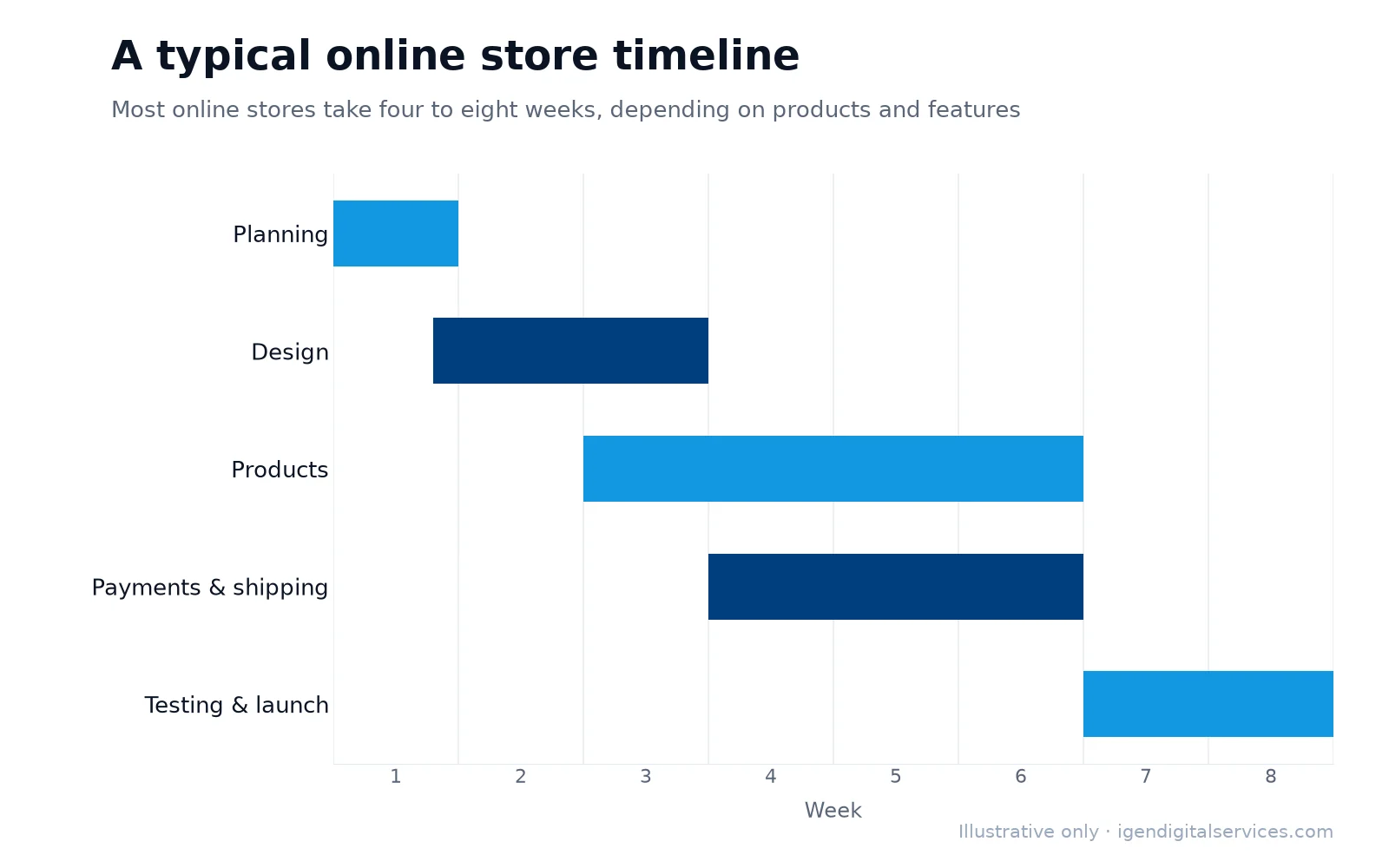
How long does it take to build an online store?
Which payment gateways can you integrate?
Can you connect my store with Shiprocket or other couriers?
Will my ecommerce website be SEO-friendly?
Can I manage products and orders myself?
What makes you a good ecommerce website development company in India?
Do you redesign existing online stores?
Do you provide product photography and descriptions?
Can customers pay with UPI and cash on delivery?
Is WooCommerce or Shopify better for ecommerce website development in India?
Want expert help with this?
See what our ecommerce website development include, or get a free proposal for your business.

Digital Marketing Consultant and Certified Marketing Analyst from IIT Roorkee, with 10+ years of experience helping businesses improve their digital presence, generate qualified leads and drive measurable growth through SEO, AEO, GEO, Google Ads, performance marketing and analytics.