What is mobile marketing, and how do you use WhatsApp and SMS without annoying customers? Your customers check their phones dozens of times a day, and many of them would rather send a WhatsApp message than fill in a form or make a call. This guide explains how mobile marketing works in India, the difference between official WhatsApp marketing and risky bulk tools, how SMS marketing fits in, what it costs and how to measure results.
What is mobile marketing?
Mobile marketing means reaching customers directly on their phones — through WhatsApp, SMS, mobile-first ads, app campaigns and mobile-friendly websites. In India, where most people come online through a smartphone, it is often the fastest way to get a message read and a reply received.
The most effective mobile marketing combines three things: a clear permission to message someone, a useful message at the right moment, and an easy way to respond — usually a WhatsApp reply, a tap-to-call button or a short link.
WhatsApp marketing: the official way
WhatsApp marketing done properly uses the WhatsApp Business Platform (often called the WhatsApp Business API), Meta’s official system for businesses. It lets you:
- Send approved message templates for offers, reminders, order updates and alerts.
- Reply to customers from a shared inbox so several team members can help.
- Add buttons, catalogues, images and quick replies to messages.
- Automate common answers with a chatbot and hand complex queries to your team.
- Show a verified business profile that customers can trust.
Meta explains the platform on its official WhatsApp Business Platform page. Messages sent this way follow WhatsApp’s rules, so your number stays safe.

Bulk WhatsApp marketing services: what to avoid
Many “bulk WhatsApp marketing services” send messages from ordinary numbers using unofficial software. It looks cheap, but it carries real risks: numbers get banned, messages reach people who never agreed to hear from you, and your brand is associated with spam. Official bulk messaging through the WhatsApp Business Platform works differently — people must opt in, templates are approved in advance, and customers can block or report you, which keeps quality high. We only run WhatsApp campaigns through the official platform.
SMS marketing in India
SMS marketing is still valuable for time-sensitive messages: appointment reminders, OTPs, delivery updates, flash sales and alerts that must reach people without internet access. In India, commercial SMS must be registered on the DLT (Distributed Ledger Technology) system mandated by the Telecom Regulatory Authority of India — your business, sender IDs and message templates are all registered before sending. We handle DLT registration, template approval and sending through reliable providers, so messages are delivered and compliant.
WhatsApp, SMS or email: which should you use?
| Channel | Best for | Strengths | Limits |
|---|---|---|---|
| Conversations, offers, support, order updates | Rich media, replies, very high read rates | Needs opt-in and approved templates | |
| SMS | Reminders, alerts, OTPs, urgent updates | Works on any phone, no internet needed | Plain text, DLT registration required |
| Newsletters, detailed information, receipts | Low cost, rich content, you own the list | Lower open rates, can land in spam |
Most businesses use all three for different jobs, coordinated so customers are never flooded with messages. Our email marketing service covers the email side.
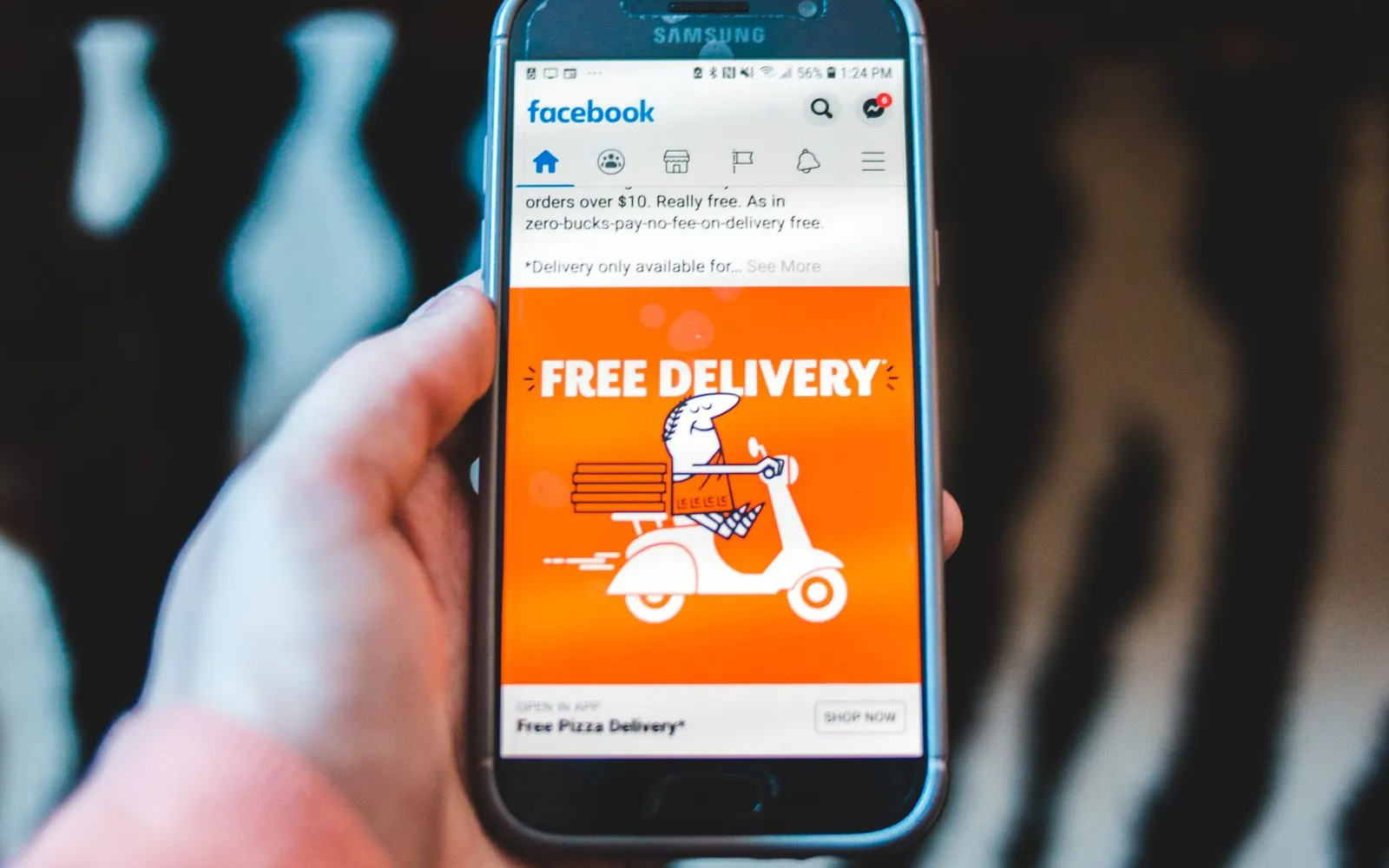
Click-to-WhatsApp ads
One of the most effective mobile marketing tactics in India is the click-to-WhatsApp ad on Facebook and Instagram. Instead of sending people to a website form, the ad opens a WhatsApp chat with your business. Your team — or an automated assistant — answers questions immediately, qualifies the enquiry and books the next step. For clinics, coaching institutes, real estate, retail and local services, this often brings more conversations than a traditional form, because it matches how customers already prefer to communicate.
Mobile marketing use cases by industry
| Industry | Mobile marketing that works |
|---|---|
| Clinics and hospitals | Appointment reminders, report-ready alerts, health camp invitations |
| Schools and coaching | Admission updates, class schedules, fee reminders, result alerts |
| Retail and showrooms | New stock, festival offers, loyalty rewards, catalogue sharing |
| Restaurants and cafés | Table bookings, special menus, order updates |
| Real estate | Project updates, site-visit reminders, brochure sharing |
| E-commerce | Order confirmation, shipping updates, abandoned-cart reminders |
Chatbots and automation on WhatsApp
A WhatsApp chatbot answers the questions your team hears every day — prices, timings, locations, course details, availability — at any hour. It can share a catalogue, collect a customer’s name and requirement, book an appointment or send a payment link, and it hands the conversation to a person whenever the customer needs one. Automations also run in the background: booking confirmations, reminders the day before an appointment, payment receipts, delivery updates and requests for a review after a visit. Together they save staff time and make sure no enquiry waits until the next morning.
Mobile-first landing pages and ads
When someone taps an ad on their phone, the page that opens decides whether they enquire. Mobile-first landing pages load quickly on Indian mobile networks, show the offer and the main benefit on the first screen, and put the call and WhatsApp buttons within easy reach of the thumb. Forms are short, with the right keyboard for phone numbers, and nothing forces the visitor to zoom or pinch. We design campaign pages this way by default and test them on real phones before any budget is spent.
App promotion
If your business has an app, mobile marketing can drive installs and, more importantly, active users. App campaigns on Google and Meta target people likely to install and use it, while deep links in WhatsApp and SMS messages take existing customers straight to the right screen in the app. We measure installs, registrations and in-app purchases, not just downloads, so budget goes to the audiences who become real users.
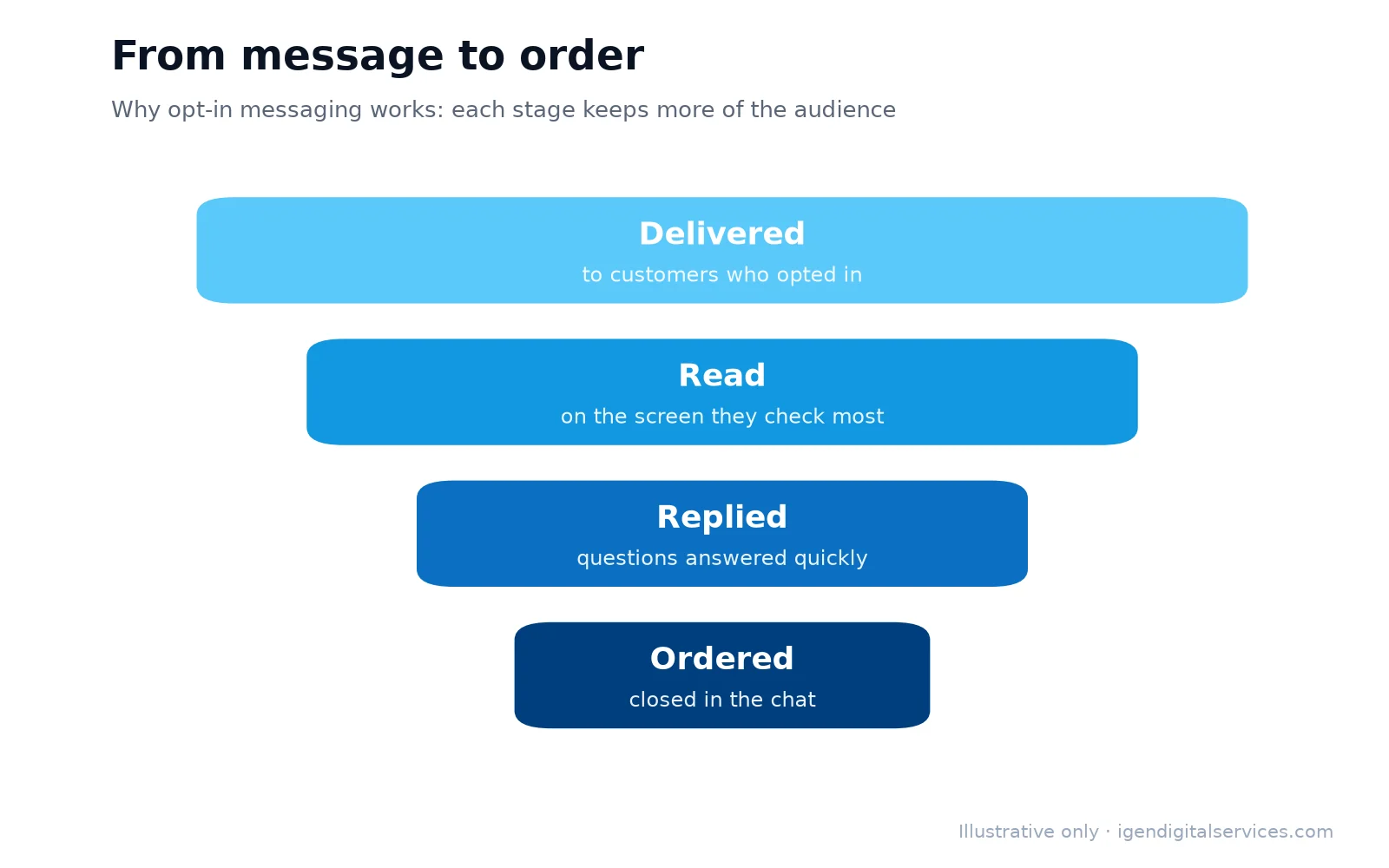
Our mobile marketing process
- Audit — how you talk to customers today, the channels they prefer and the permissions you already have.
- Set up — WhatsApp Business Platform, verified profile, DLT registration for SMS and message templates.
- Automate — chatbot flows, reminders and order or booking updates.
- Campaign — segmented offers and updates, plus click-to-WhatsApp ads where they fit.
- Report — replies, bookings, sales and savings each month, with the plan for the next.
Common mobile marketing mistakes
- Messaging people who never opted in, which leads to blocks and bans.
- Sending the same broadcast to everyone, whatever they bought or asked about.
- Long, text-heavy messages with no clear next step.
- No one available to reply when customers respond.
- Ignoring timing — messages late at night or during working hours for the wrong audience.
How much does WhatsApp marketing cost?
WhatsApp marketing has two parts. Meta charges for messages sent through the WhatsApp Business Platform, based on the message category (marketing, utility, authentication or service) and the recipient’s country; this is paid to Meta or its partner provider. Our fee covers setup, templates, automation, campaign management and reporting, quoted as a fixed monthly amount. SMS costs depend on volume and are billed per message by the SMS provider.
Because WhatsApp messages are read so widely, a small, well-targeted campaign to people who opted in often performs better than a large, untargeted one.
Getting permission and keeping trust
Permission is the foundation of mobile marketing. We help you collect opt-ins on your website, forms, invoices, ads and at the counter, with a clear explanation of what customers will receive. Every campaign makes it easy to stop receiving messages. Sending fewer, more useful messages keeps block rates low and protects your number’s quality rating.
Writing messages people want to read
Short, personal and useful messages perform best on a phone. A good WhatsApp or SMS message names the customer where possible, says why it matters to them in the first line, keeps to a few short sentences and ends with one clear action — reply, book, call or view. Images work well for products, menus and offers, while a short video can explain a new service better than text. Timing matters too: reminders a day before an appointment, offers in the evening when people browse, and nothing late at night. We write and test messages for your audience, and keep a library of approved templates so your team can send updates quickly and consistently.
Using WhatsApp for customer support
Mobile marketing is not only about promotions. Many customers now expect to ask questions, track orders and solve problems on WhatsApp. A shared inbox lets your team answer from one number, assign chats to the right person, use saved replies for common questions and see the full history of each customer. Fast, friendly support builds the trust that makes future marketing messages welcome rather than ignored.
Integrating mobile marketing with your other tools
Mobile campaigns work best when they are connected to the rest of your business. We link WhatsApp and SMS with your website forms, online store, booking system or CRM, so a new enquiry, order or appointment automatically triggers the right message. Customer replies and outcomes flow back into your records, which keeps every team member informed and makes reporting accurate.
Measuring mobile marketing results
We track delivery, read rates, replies, clicks, bookings and sales from every campaign, and report on the cost per conversation and cost per customer. Automations such as reminders and order updates are measured by the problems they solve — fewer missed appointments, faster payments and fewer support calls — as well as the revenue they bring.
If you would like expert help, explore our mobile marketing services or request a quote for your business.
Key takeaways
- Mobile marketing reaches customers where they spend most of their time: on their phones.
- Use the official WhatsApp Business Platform; unofficial bulk tools risk bans and spam complaints.
- Commercial SMS in India must be registered on the DLT system.
- Click-to-WhatsApp ads turn social media attention into real conversations.
Frequently asked questions
What is the WhatsApp Business API?
Is bulk WhatsApp marketing legal in India?
How much does WhatsApp marketing cost?
Do I need DLT registration for SMS marketing?
Can WhatsApp replies be automated?
Will my customers find WhatsApp messages annoying?
Can you set up WhatsApp for a small business without the API?
How do you measure the success of WhatsApp campaigns?
Can WhatsApp messages be sent in Hindi?
How quickly can you set up the WhatsApp Business Platform?
Is WhatsApp marketing suitable for B2B businesses?
Want expert help with this?
See what our mobile marketing services include, or get a free proposal for your business.

Digital Marketing Consultant and Certified Marketing Analyst from IIT Roorkee, with 10+ years of experience helping businesses improve their digital presence, generate qualified leads and drive measurable growth through SEO, AEO, GEO, Google Ads, performance marketing and analytics.