Search changes every year, and with it the list of SEO techniques people recommend. Many old tricks — keyword stuffing, bulk directory links, thin pages for every variation of a phrase — now do more harm than good. The SEO techniques below are the ones that keep working, because they match what search engines are trying to reward: pages that answer the searcher better than anything else.
1. Match search intent before anything else
Every search has an intent: to learn, to compare or to act. Before writing or optimising a page, look at what already ranks for the search. If the results are guides, a sales page will struggle; if they are product pages, a long article will. Matching the format people expect is the most important of all SEO techniques, and it costs nothing.

2. Rewrite titles and descriptions for clicks
Your title is your advertisement in the search results. A better title can lift clicks without any change in ranking.
- Put the main topic first, where it is read and never cut off.
- Be specific: “Laptop Repair in Kanpur – Same-Day Service” beats “Home – Services”.
- Add a reason to click: a number, a benefit or the current year where it is genuine.
- Write a description that completes the thought and invites the click.
Find pages with many impressions but few clicks in Google Search Console and start there.
3. Answer the question first
Put the direct answer in the first sentences under a heading that matches the question, then add detail. This structure wins featured snippets, helps voice assistants and gives AI tools something clear to quote. It also suits readers, who usually want the answer before the explanation.
4. Strengthen internal links
Internal links tell search engines which pages matter and help visitors find related information.
- Link from your strongest pages to the pages you want to rank.
- Use descriptive link text, such as “our local SEO service”, not “click here”.
- Fix orphan pages that nothing links to.
- Add links from new articles to relevant service pages, and back again.
5. Refresh existing content
Updating a page that already has some visibility is usually faster than writing a new one. Review important pages every few months: correct anything out of date, add missing questions, improve examples and update the title if the search results have changed. A refreshed page often moves up within weeks.
6. Fix technical basics
Technical problems cap the results of every other technique. The essentials:
| Check | Why it matters |
|---|---|
| Pages are indexable | A stray noindex tag hides a page completely |
| HTTPS everywhere | Browsers warn visitors about insecure pages |
| Fast on mobile | Slow pages lose visitors and rankings |
| One canonical address per page | Duplicates split ranking signals |
| XML sitemap submitted | Helps search engines find new pages |
| No broken links or redirect chains | Wasted crawl time and lost visitors |
Google’s SEO starter guide covers these foundations in plain language, and our free SEO analysis tool checks many of them in seconds.
7. Add structured data
Structured data, or schema markup, tells search engines exactly what a page is about: a local business, a product, an article or a set of questions. It can make pages eligible for rich results and helps AI assistants describe your business accurately. Start with organisation or local business markup, then add product, article and FAQ markup where they apply.
8. Build topic clusters
Instead of scattered articles, cover a subject thoroughly: one main page for the broad topic, supported by articles on specific questions, all linked together. This shows depth, helps each page rank for its own searches and makes your website the obvious source on the subject.

9. Earn links and mentions
Links from relevant, trusted websites remain a strong signal. The reliable ways to earn them are slow but safe:
- Publish something worth citing: original guides, data, tools or checklists.
- Build local relationships: suppliers, associations, events and local press.
- Get listed accurately in the directories your industry uses.
- Contribute expertise to publications your customers read.
Avoid link packages and networks. They are among the SEO techniques that lead to penalties.
10. Show real experience
Search engines look for signs that content comes from people who know the subject. Name the author, explain how you know what you know, use your own photos and examples, cite trustworthy sources and keep information current. For a business, that means writing from real work, not rewriting what others have said.
Techniques to leave behind
- Repeating keywords unnaturally in text, titles or image names.
- Creating near-identical pages for every city or variation.
- Buying links or exchanging them in bulk.
- Publishing large amounts of unedited, generic content.
- Hiding text or showing search engines different content from visitors.
Where to start
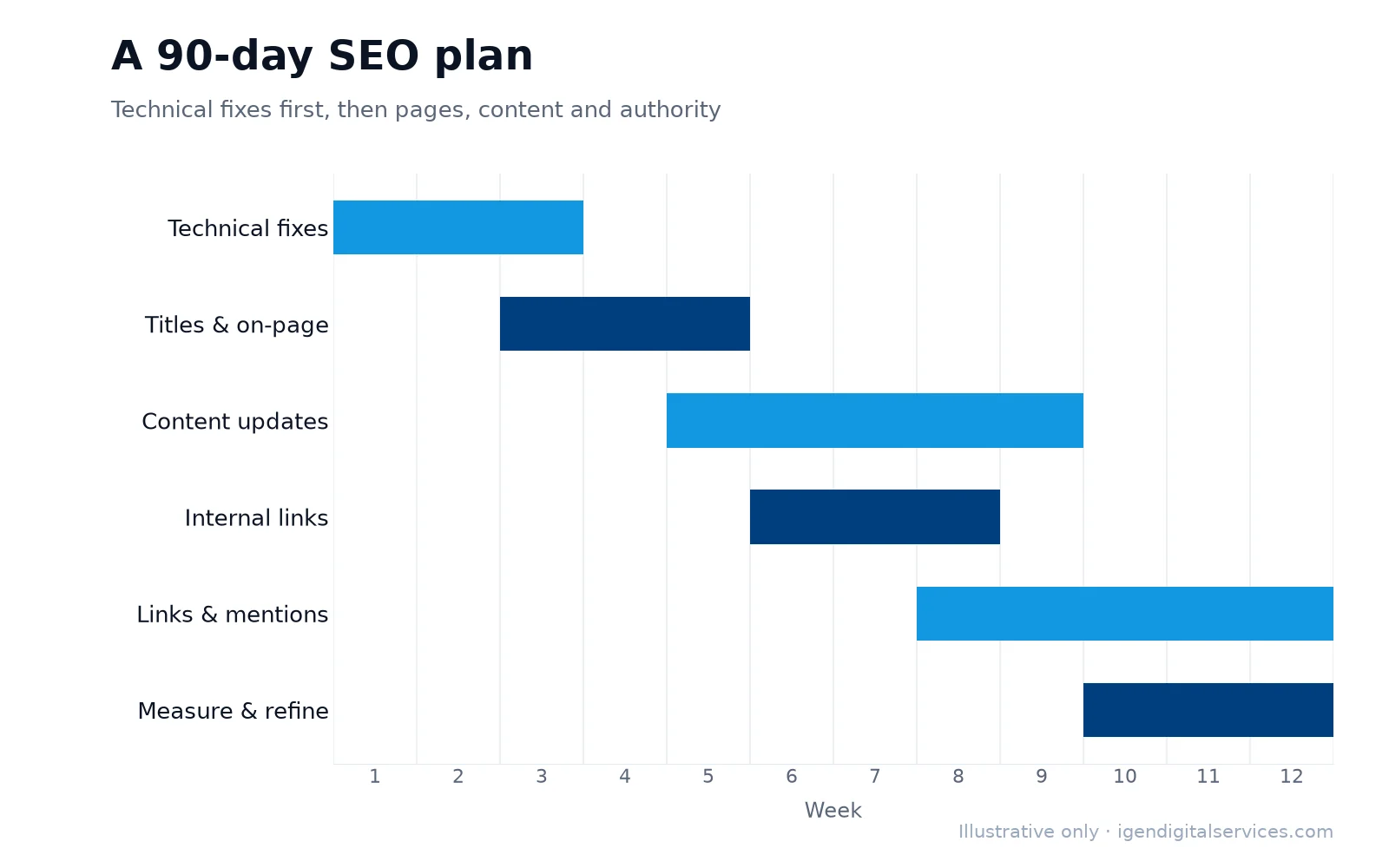
If you have limited time, apply these SEO techniques in order: fix technical basics, rewrite titles, improve your most important pages, then build content and links. Measure with Search Console and give each change a few weeks before judging it.

If you would like a team to apply these SEO techniques for you, see our SEO services.
A quick on-page checklist
Before publishing or updating any page, run through these points. They apply several of the SEO techniques above in a few minutes:
- The main topic appears in the title, the first paragraph and one heading.
- The page has one H1 and clear subheadings that match real questions.
- The direct answer comes first, with detail after it.
- Images are compressed and have descriptive alt text.
- The page links to at least two related pages, and two link back to it.
- There is one clear next step for the reader.
- The page loads quickly on a phone.
Measuring whether SEO techniques worked
Change one thing at a time where you can, and give it a few weeks. Then check:
| What you changed | What to look at |
|---|---|
| Titles and descriptions | Click-through rate in Search Console |
| Content refresh | Average position and clicks for the page |
| Internal links | Impressions and position of the linked page |
| Technical fixes | Indexed pages and Core Web Vitals |
| New content | Queries the page starts appearing for |
Keep a simple log of what you changed and when. It turns guesswork into evidence and shows which SEO techniques are worth repeating.
SEO techniques for local and ecommerce websites
Local businesses should add a complete Google Business Profile, consistent contact details, reviews and a page for each area served. Online stores should focus on category pages, unique product descriptions, product structured data and a clean structure that avoids duplicate pages from filters. The principles stay the same; the pages that matter most are different.
Key takeaways
- The most effective SEO techniques match search intent and answer questions clearly.
- Titles, internal links and content refreshes are fast wins on pages you already have.
- Technical basics and structured data remove the ceiling on everything else.
- Links and authority come from real expertise, not packages.
Frequently asked questions
Which SEO techniques work fastest?
Are backlinks still important?
Do SEO techniques differ for local businesses?
How often do SEO techniques change?
Can I apply these SEO techniques myself?
Does AI-written content rank?
Want expert help with this?
See what our SEO services include, or get a free proposal for your business.

Digital Marketing Consultant and Certified Marketing Analyst from IIT Roorkee, with 10+ years of experience helping businesses improve their digital presence, generate qualified leads and drive measurable growth through SEO, AEO, GEO, Google Ads, performance marketing and analytics.